
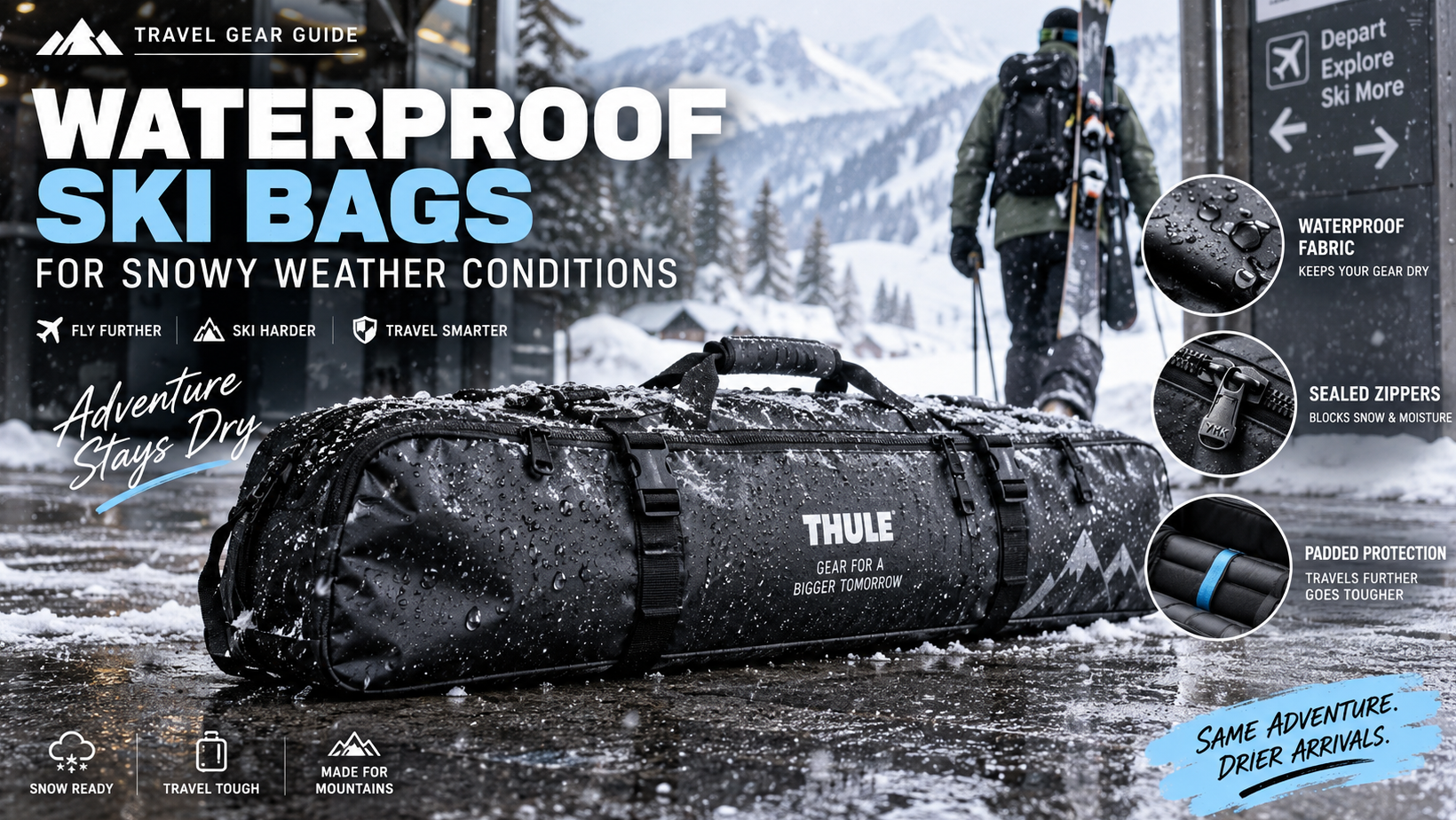
A waterproof ski bag claim should be tested against the entire construction, not just the outer fabric. Coated material can shed snow and brief moisture while seams, zippers, openings, and abrasion areas still allow water to reach the interior under heavier exposure.
For normal winter travel, the most useful goal is a bag that resists snow and slush, keeps the equipment protected during transfers, and dries easily after use. True submersion-level waterproofing is a different standard from ordinary weather resistance.
Waterproof Ski Bag Features To Check In Snowy Conditions
Compare Water Resistant Luggage By The Whole Shell
Look beyond one fabric claim and inspect seam lines, base panels, and openings. Better water resistant luggage is honest about what the material can resist and where moisture may still enter.
Use Snow Gear Protection Around The Bottom Panel
The base contacts wet pavement, vehicle floors, and snowbanks more often than the top of the case. Strong snow gear protection includes a durable bottom area that can be wiped clean after travel.
Choose Winter Travel Bags That Dry Easily
A weather-resistant shell is only part of the routine. Good winter travel bags open far enough for the lining, straps, and padding to dry before storage.
Check Outdoor Equipment Bags For Abrasion Damage
Coatings and water-resistant layers can fail where fabric is repeatedly scraped. Compare outdoor equipment bags at corners, wheel housings, and high-contact edges before focusing on marketing labels.
Use Weatherproof Storage Without Trapping Moisture
Do not seal wet skis or clothing in the case for long periods. A weatherproof storage routine should include wiping, ventilation, and complete drying after exposure to snow or slush.
Waterproof Ski Bag Weather Matrix
Use this table after the first complete packing test. The goal is to compare the bag with the exact equipment and route that will travel.
| Check | What to Review | Why It Matters |
|---|---|---|
| Outer Fabric | Coating and water resistance | First barrier against snow and slush |
| Seams | Construction and exposed stitching | Common moisture entry points |
| Zippers | Flaps, coatings, placement | Affects water exposure |
| Bottom Panel | Abrasion and wet-ground contact | Needs durability and easy cleaning |
| Padding | Drying speed after exposure | Can retain hidden moisture |
| Storage | Open ventilation after use | Prevents trapped dampness |
Pre-Flight Packing Checklist
- Inspect fabric coating claims
- Check seam construction
- Look at zipper exposure
- Examine bottom abrasion zones
- Pack only dry gear for storage
- Wipe snow and slush after travel
- Open the bag fully to dry
- Store without trapping moisture
Run the checklist with the bag completely loaded. An empty-bag inspection cannot reveal balance, zipper tension, internal movement, or the way hard gear presses into the shell.
Airline Rule Check
Sports-equipment policies can change by airline, route, aircraft, fare type, and baggage weight. Measure and weigh the finished bag at home, then compare the result with the operating carrier’s current rules before travel.
For a current airline example, review American Airlines sports-equipment information and remember that weather resistance does not change baggage size or weight rules.
Final Buying Decision
A useful waterproof ski bag protects against the kind of moisture winter travelers actually encounter: falling snow, wet platforms, slush, and short outdoor transfers. The shell, seams, zippers, base, and drying routine all contribute.
Choose realistic weather protection rather than a single bold label. If the bag will sit in heavy rain or standing water, verify the manufacturer test standard before assuming complete waterproofing.
Frequently Asked Questions
Is water-resistant the same as waterproof?
No. Water resistance generally means limited protection against moisture, while waterproof claims should reflect stronger construction and testing.
Do coated fabrics guarantee a dry interior?
No. Seams, zippers, openings, and abrasion can still allow moisture inside.
Should wet skis stay inside the bag overnight?
It is better to remove or ventilate wet gear and allow the bag to dry fully.
Can a ski bag be washed in a machine?
Only if the manufacturer specifically allows it. Coatings, padding, and hardware may require hand cleaning.
What part of a ski bag gets wet most often?
The bottom panel and lower edges often contact slush, wet floors, and snow during travel.
