
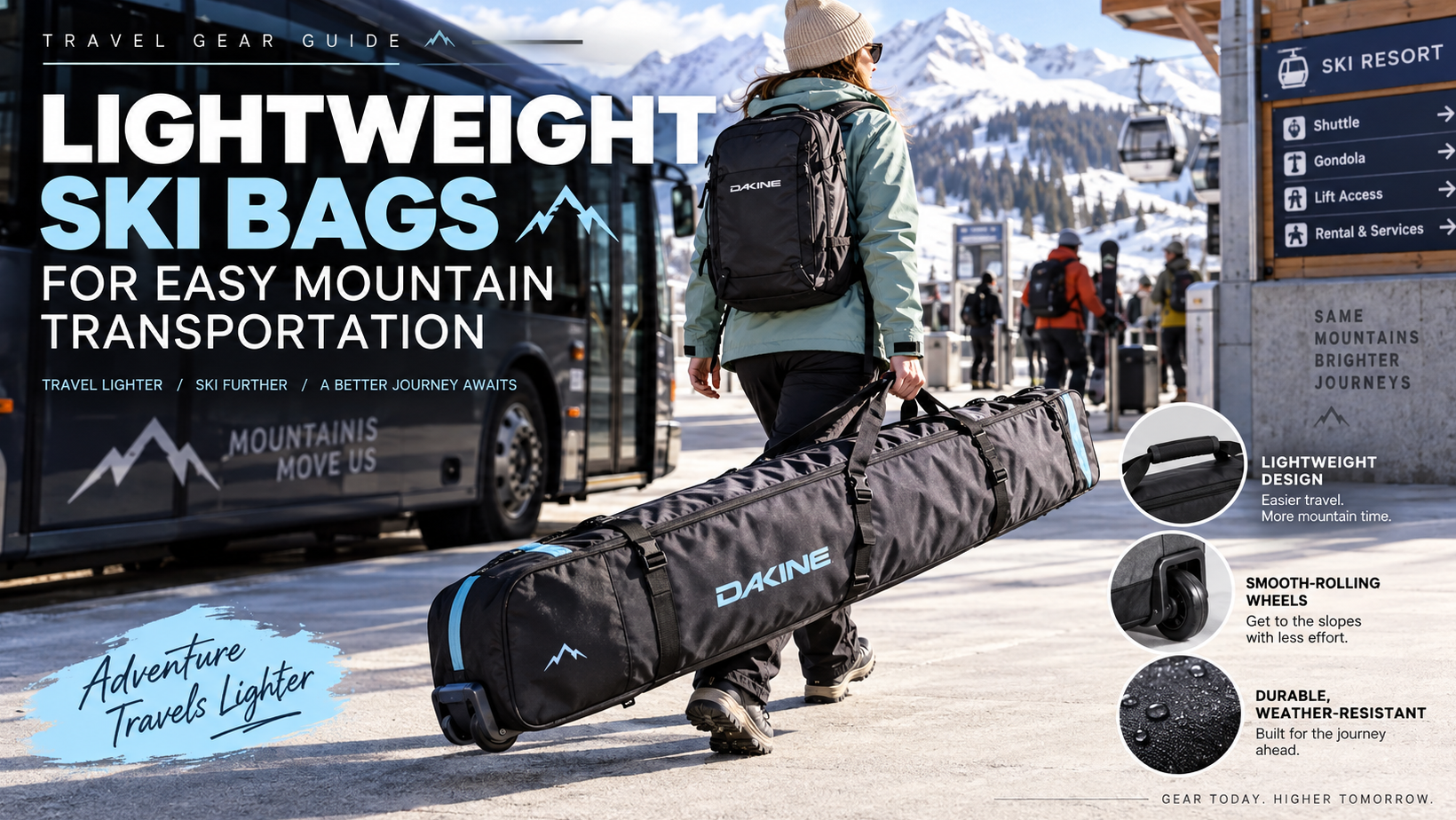
A lightweight ski bag can make transfers easier when the case still protects the edges, bindings, and tips that are most exposed during transport. Low empty weight is useful because it leaves more of the baggage allowance for the skis and other equipment you actually need.
The trade-off is structure. Removing padding, wheels, or reinforcement can make a bag lighter but also easier to fold, twist, or drag against hard surfaces. The best lightweight option keeps the essential protection zones while avoiding unnecessary bulk.
Lightweight Ski Bag Features For Easier Transfers
Compare Portable Ski Luggage By Loaded Weight
Weigh the bag with the exact skis and poles rather than comparing product weight alone. Good portable ski luggage reduces dead weight while keeping the longest edges and hardware under control.
Use Easy Carry Bags For The Route You Actually Walk
Shoulder straps are simple, while wheels can reduce effort on smooth floors. Compare easy carry bags by the longest walking segment on the trip, not by one carry feature in isolation.
Balance Travel Convenience With Protection
A thin shell may fold easily but can leave bindings more exposed. Use the travel convenience decision to identify where padding is necessary and where weight can safely be reduced.
Test Ski Gear Mobility Through Tight Spaces
Move the loaded bag through doors, stairs, vehicle trunks, and corners at home. Better ski gear mobility comes from controlled balance and useful handles rather than empty-bag weight alone.
Check How Compact Winter Bags Store
A flexible case can save space between trips, but repeated hard folds may stress padding or coatings. Compare compact winter bags by how they fold, dry, and recover their shape after storage.
Lightweight Ski Bag Trade-Offs
Use this table after the first complete packing test. The goal is to compare the bag with the exact equipment and route that will travel.
| Check | What to Review | Why It Matters |
|---|---|---|
| Empty Weight | Lower is easier to carry | May reduce structure |
| Padding | Targeted zones save weight | Too little exposes hardware |
| Wheels | Reduce terminal effort | Add weight and bulk |
| Handles | Multiple balanced points | Poor placement causes twisting |
| Fabric | Light but abrasion-resistant | Thin fabric may scuff faster |
| Packability | Easy home storage | Hard creases can affect shape |
Pre-Flight Packing Checklist
- Record the empty bag weight
- Load the real skis and poles
- Check tip and tail protection
- Lift from each handle
- Carry the bag for ten minutes
- Test stairs and vehicle loading
- Measure the packed case
- Store it without crushing padding
Run the checklist with the bag completely loaded. An empty-bag inspection cannot reveal balance, zipper tension, internal movement, or the way hard gear presses into the shell.
Airline Rule Check
Sports-equipment policies can change by airline, route, aircraft, fare type, and baggage weight. Measure and weigh the finished bag at home, then compare the result with the operating carrier’s current rules before travel.
For a current airline example, review Delta Air Lines sporting-equipment guidance and compare your finished bag weight with the operating carrier limits.
Final Buying Decision
A lightweight ski bag earns its advantage when it remains protective and controllable after the skis are inside. Saving a little empty weight is useful only if the bag does not become awkward or vulnerable in transit.
Prioritize targeted padding, strong handles, and a stable shape. If your route includes long terminals, wheels may justify the added hardware; for short car-based trips, a simple shoulder-carry case may be enough.
Frequently Asked Questions
How light should a ski bag be?
There is no single ideal empty weight. Compare the complete loaded weight, protection, and carry route.
Do lightweight ski bags have enough padding?
Some use targeted padding effectively. Check the nose, tail, binding zone, and sidewalls rather than assuming light means unprotected.
Are wheels worth the extra weight?
They can be worthwhile for long smooth walking routes, especially airports, but not every trip needs them.
Can a lightweight bag hold clothing too?
It can when space and airline rules allow, but overpacking can create pressure on bindings and zippers.
Do lightweight bags store more easily?
Often yes, but follow the care directions and avoid sharp folds that damage structure or coatings.
