
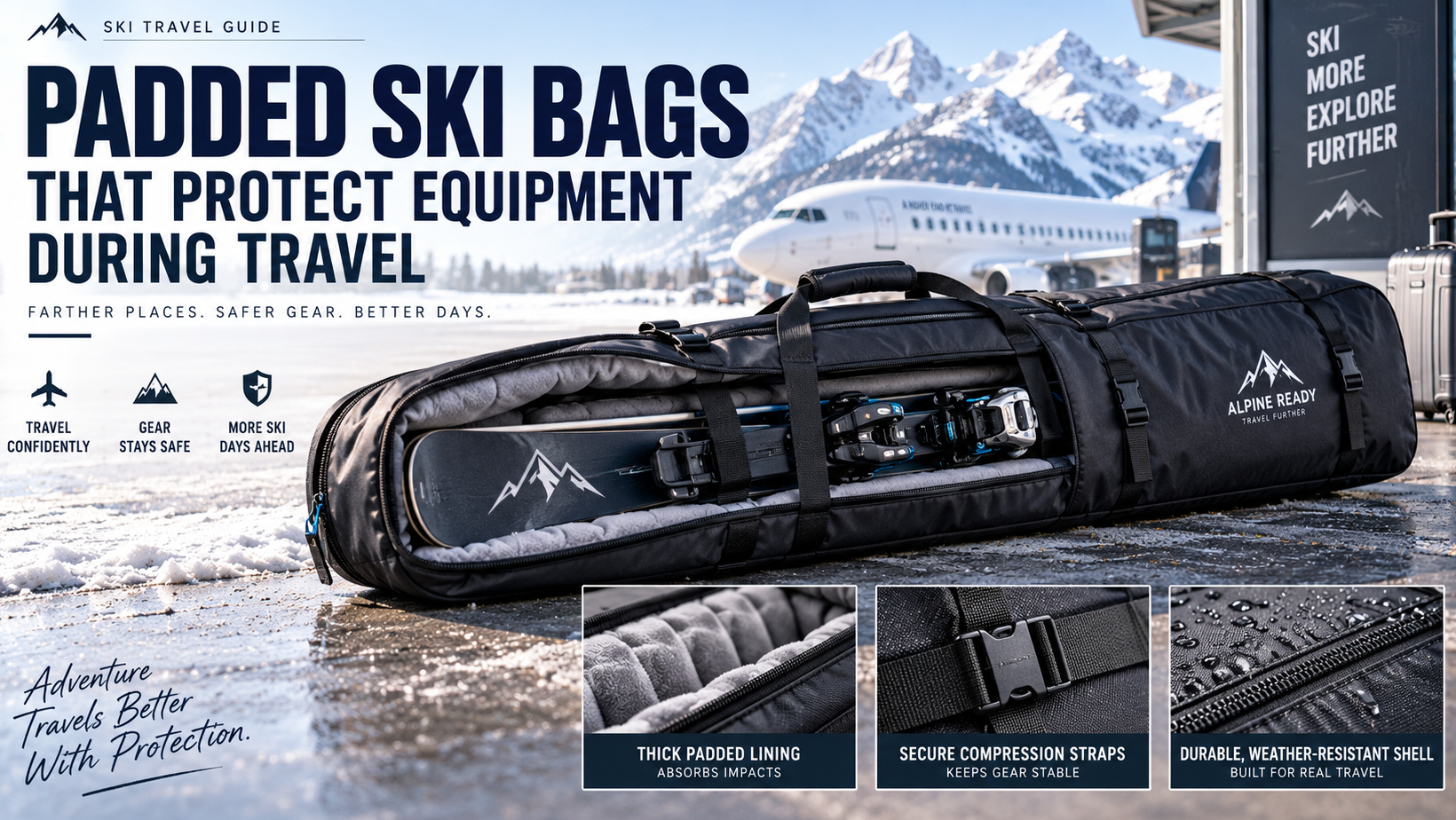
A padded ski bag should absorb normal bumps and reduce direct contact between skis, bindings, and the outer shell. The useful question is not simply how thick the padding feels. Placement matters because the nose, tail, binding area, handles, and bottom panel experience different stresses during travel.
Inspect the case with skis inside. Soft foam can look impressive while leaving hard edges exposed, and dense padding can steal interior clearance if the bag was sized too tightly. A good padded setup protects impact zones without forcing the zipper or allowing the skis to slide freely.
Padded Ski Bag Protection Zones To Inspect
Inspect The Ski Protection Around Nose And Tail
The ends often meet hard surfaces first. Check ski protection around the nose and tail while the skis are loaded, then press the outer shell to feel whether hard edges can contact the ground through the padding.
Check Ski Equipment Travel Around Bindings
Bindings create height and sharp pressure points. Better ski equipment travel protection keeps enough clearance above the bindings so the zipper does not become the highest impact surface.
Use Ski Travel Protection With Internal Straps
Padding cannot help if the skis slide from one end to the other. Combine ski travel protection with compression or internal straps that control movement without crushing bindings.
Judge A Durable Ski Bag By Abrasion Areas
Airport belts, vehicle trunks, and storage floors wear the same zones repeatedly. Compare a durable ski bag around the bottom, corners, handle mounts, and wheel housings rather than focusing only on fabric denier.
Compare Padded Ski Bags By Full Packed Fit
A bag can be heavily padded yet too tight for the actual skis. Use padded ski bags with enough space for protective clearance while keeping the gear from shifting excessively.
Padded Ski Bag Protection Matrix
Use this table after the first complete packing test. The goal is to compare the bag with the exact equipment and route that will travel.
| Check | What to Review | Why It Matters |
|---|---|---|
| Nose and Tail | End-panel cushioning | Reduces direct end impact |
| Binding Zone | Top and side clearance | Avoids zipper pressure |
| Base | Dense abrasion layer | Protects ground-contact area |
| Internal Straps | Stable ski position | Limits sliding inside case |
| Handles | Reinforced attachment points | Controls load during lifting |
| Exterior Shell | Abrasion and moisture resistance | Protects padding and gear |
Pre-Flight Packing Checklist
- Load the exact skis
- Press around nose and tail
- Check binding clearance
- Secure internal straps
- Lift the case from both ends
- Inspect bottom abrasion areas
- Close the zipper without tension
- Photograph the packed setup before travel
Run the checklist with the bag completely loaded. An empty-bag inspection cannot reveal balance, zipper tension, internal movement, or the way hard gear presses into the shell.
Airline Rule Check
Sports-equipment policies can change by airline, route, aircraft, fare type, and baggage weight. Measure and weigh the finished bag at home, then compare the result with the operating carrier’s current rules before travel.
For a current airline example, review American Airlines sports-equipment information and confirm the packed weight and dimensions before the trip.
Final Buying Decision
A padded ski bag is useful when the cushioning is placed where the real equipment needs it and the loaded skis stay centered during handling. Thick foam alone does not solve poor fit or uncontrolled movement.
Test every protection zone with the skis inside. If hard hardware can still press directly into the outer shell or the bag only closes under tension, choose a better size or construction.
Frequently Asked Questions
Is full-length padding better than partial padding?
It can provide broader coverage, but targeted padding may be enough for some trips. Fit and pressure points still matter.
How thick should ski bag padding be?
Thickness alone is not a reliable measure. Check density, coverage, and the way it behaves with the skis loaded.
Should bindings be wrapped separately?
Additional soft protection can help when it does not create zipper pressure or interfere with straps.
Can padding make a ski bag too tight?
Yes. Thick padding reduces usable interior space, so verify the exact loaded fit.
Does a padded bag prevent all damage?
No. It reduces normal travel impact but cannot guarantee protection from extreme mishandling or crushing.
