
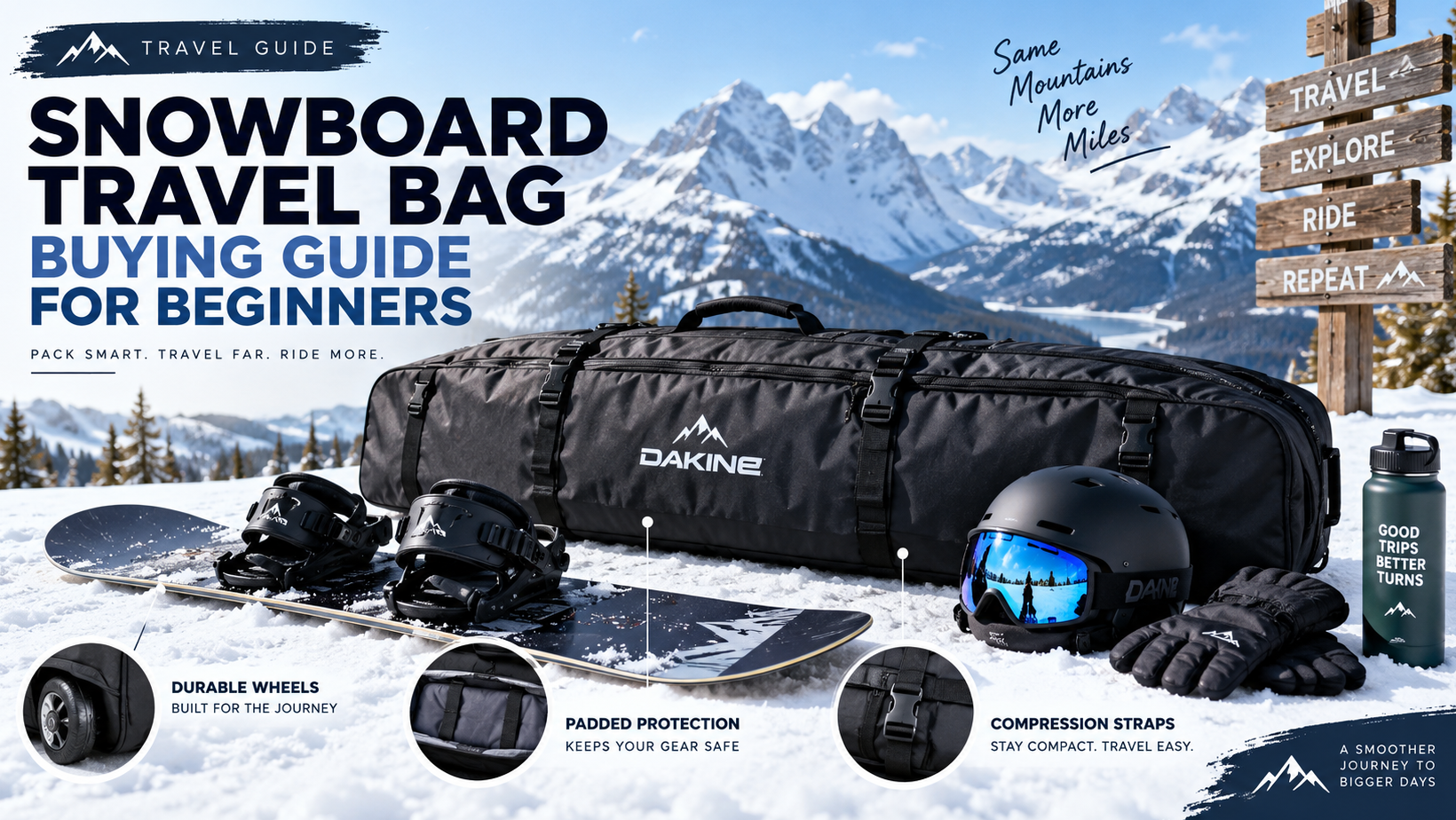
A snowboard travel bag should fit the board in its real travel setup, not just match the length printed on the product page. Bindings add height, boots add dense weight, and extra clothing can change the way pressure moves through the case. Beginners get a better result by measuring first and choosing features second.
Start with the board and bindings exactly as they will travel. Then decide whether boots belong inside, whether wheels are worth the added weight, and how much padding is appropriate for the trips you expect to take most often.
Snowboard Travel Bag Buying Checks For Beginners
Choose Snowboard Luggage By Board Fit
Measure the board from tip to tip and include the binding profile in the fit test. Good snowboard luggage gives enough protective clearance without leaving a long empty zone that lets the board move.
Compare A Snowboard Equipment Bag With Boots Inside
Boots can share the case when the bag is designed for the load and hard shells stay away from board edges. Use the snowboard equipment bag comparison to decide whether one combined case or a separate boot bag suits the trip.
Plan Winter Sports Travel Around Real Handling
Airports, shuttles, trains, rental cars, and hotel storage all affect the best carry system. Build winter sports travel around the longest transfer instead of choosing wheels or straps by appearance.
Protect The Board Around Bindings And Edges
Bindings and sharp edges create the most obvious pressure points. Better board protection uses padding and internal straps to keep these areas away from the zipper and outer shell.
Keep Snowboarding Gear Organized And Dry
Use soft layers only where they do not interfere with binding hardware, and keep wet boots separated from dry items. A repeatable snowboarding gear layout makes return-trip packing easier after a long day on snow.
Beginner Snowboard Bag Feature Matrix
Use this table after the first complete packing test. The goal is to compare the bag with the exact equipment and route that will travel.
| Check | What to Review | Why It Matters |
|---|---|---|
| Internal Length | Board fits with modest clearance | Avoids forced ends and excess sliding |
| Binding Clearance | Enough height and width | Reduces zipper pressure |
| Padding | Nose, tail, base, binding zones | Protects impact areas |
| Wheels | Useful for long smooth transfers | Adds weight and hardware |
| Boot Capacity | Separated stable space | Keeps hard shells off board |
| Internal Straps | Board held in position | Limits movement in transit |
Pre-Flight Packing Checklist
- Measure the board and bindings
- Protect nose and tail
- Secure binding straps
- Keep boots away from edges
- Use a case for goggles
- Close zippers without tension
- Carry or roll the complete load
- Measure and weigh before travel
Run the checklist with the bag completely loaded. An empty-bag inspection cannot reveal balance, zipper tension, internal movement, or the way hard gear presses into the shell.
Airline Rule Check
Sports-equipment policies can change by airline, route, aircraft, fare type, and baggage weight. Measure and weigh the finished bag at home, then compare the result with the operating carrier’s current rules before travel.
For a current airline example, review Delta Air Lines sporting-equipment guidance and confirm how the operating carrier counts a snowboard bag and any separate boot bag.
Final Buying Decision
A beginner snowboard travel bag should solve fit and protection before it adds extra capacity. Start with the board, then add boots, clothing, and wheels only when they improve the real travel routine.
A simple padded case that fits correctly is usually more useful than an oversized bag with features you rarely need. Do a complete packing test before the first airport trip.
Frequently Asked Questions
How much longer than my snowboard should the bag be?
Use modest clearance for padding and easy closure without leaving so much space that the board slides freely.
Should bindings stay on during travel?
They often can, provided the bag has enough width, height, and padding. Some travelers remove them for fit or protection.
Are wheels useful for beginners?
Yes when you expect long airport or station walks, but they add weight and cost.
Can snowboard boots go inside the same bag?
They can when the bag has enough space and the boots can be kept from pressing into the board or bindings.
Do beginners need a hard case?
Not necessarily. A correctly fitted padded soft case can work well for many trips.
