
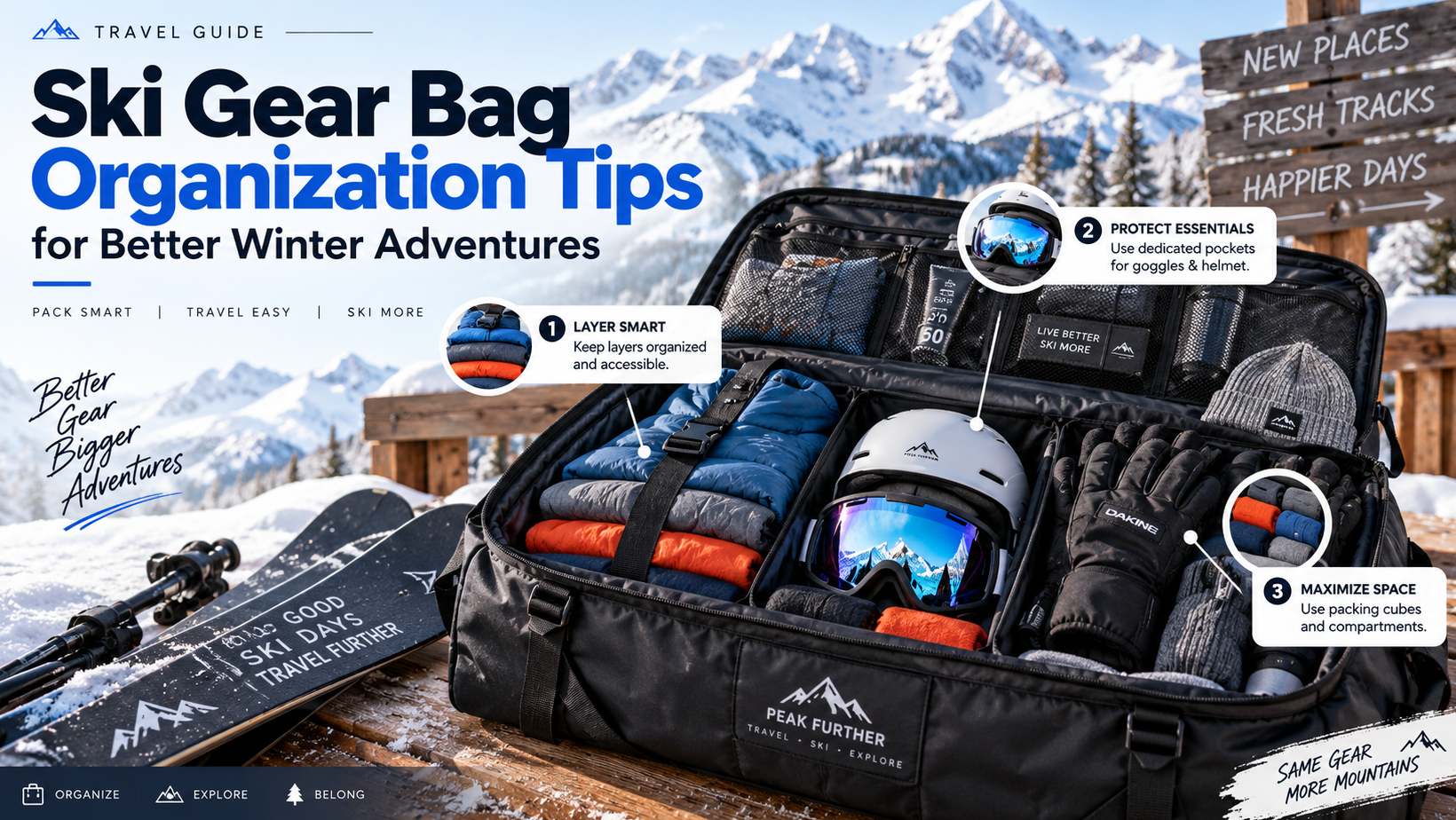
A ski gear bag becomes much easier to use when every important item has a repeatable place. The goal is not to fill every pocket. Good organization keeps wet items separated, protects goggles and lenses, balances dense equipment, and lets you confirm the packing list without emptying the entire bag.
Build the system around the order you use the gear. Boots and helmet need stable space, gloves and layers should stay reachable, and fragile items should never sit beside hard buckles or tools. A consistent layout also speeds up the return pack at the end of the day.
Ski Gear Bag Organization That Saves Time
Create Ski Accessories Storage By Category
Keep goggles, straps, tools, chargers, and small parts in dedicated pockets or pouches. Better ski accessories storage prevents small items from dropping under boots or disappearing into clothing layers.
Use Gear Organization To Separate Wet And Dry Items
Boot soles and damp gloves should not share space with base layers or travel documents. A consistent gear organization system makes the drying routine easier after every ski day.
Build Winter Equipment Packing Around Dense Items
Boots, helmet, and tools determine the load shape. Start with those pieces, then use winter equipment packing principles to place soft layers where they improve stability without crushing fragile gear.
Make Mountain Trip Preparation Repeatable
Use the same packing order before every departure and run a checklist before the bag closes. Better mountain trip preparation reduces last-minute searching and makes return-trip packing faster.
Use Outdoor Storage That Helps Gear Dry
When the trip ends, open compartments fully and remove wet equipment. Good outdoor storage habits keep moisture from sitting against fabrics, padding, and metal hardware between trips.
Ski Gear Bag Organization Map
Use this table after the first complete packing test. The goal is to compare the bag with the exact equipment and route that will travel.
| Check | What to Review | Why It Matters |
|---|---|---|
| Boots | Lowest stable zone | Keep dense weight controlled |
| Helmet | Uncompressed protected space | Protect shell shape |
| Goggles | Case or padded pocket | Avoid scratches and buckles |
| Gloves and Layers | Dry quick-access area | Easy changes and warmth |
| Small Accessories | Dedicated zipped pocket | Prevents lost parts |
| Wet Gear | Separate ventilated zone | Controls moisture |
Pre-Flight Packing Checklist
- Pack boots and helmet first
- Protect goggles in a dedicated case
- Group small accessories together
- Separate wet and dry zones
- Keep gloves easy to reach
- Use one pocket for travel documents
- Run the same checklist every trip
- Open and dry every compartment after use
Run the checklist with the bag completely loaded. An empty-bag inspection cannot reveal balance, zipper tension, internal movement, or the way hard gear presses into the shell.
Airline Rule Check
Sports-equipment policies can change by airline, route, aircraft, fare type, and baggage weight. Measure and weigh the finished bag at home, then compare the result with the operating carrier’s current rules before travel.
For a current airline example, review Delta Air Lines sporting-equipment guidance and keep travel-critical items accessible if checked sports gear is delayed.
Final Buying Decision
A useful ski gear bag organization system is simple enough to repeat. The same pocket should hold the same type of item on every trip, while dense, wet, and fragile gear stays separated.
If the bag only works when every cavity is overfilled, the system is too complicated. Remove non-essential items or use a better-sized bag so the layout remains easy to inspect and repack.
Frequently Asked Questions
What should go in a ski gear bag first?
Start with the densest hard items such as boots and helmet, then place protected fragile gear and soft layers around them.
Where should goggles be packed?
Use a rigid case or a dedicated padded pocket away from boot buckles, tools, and sharp hardware.
How should wet gloves and socks be stored?
Separate them from dry clothing and remove them promptly after travel so they can dry fully.
Should every pocket be filled?
No. Empty space can improve access and reduce pressure on fragile equipment.
How can I avoid forgetting small accessories?
Give them one dedicated zipped pocket and use the same packing checklist before every trip.
