
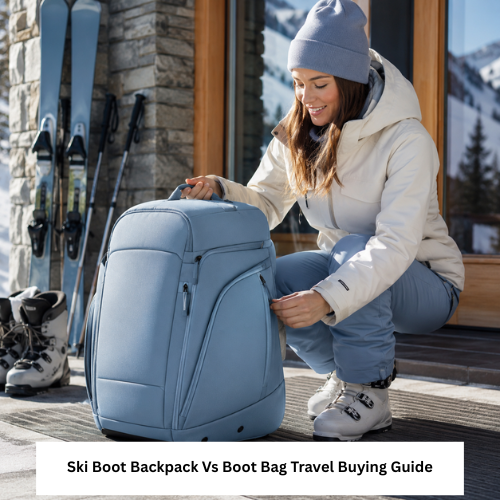
A ski boot backpack keeps boots and selected accessories on the wearer’s back, while a standard boot bag usually uses handles or a shoulder strap. The better choice depends on walking distance, boot size, helmet storage, balance, airline plans, and how much wet gear must be separated.
Ski travel bag offers several backpack and handled formats, but buyers should verify current dimensions, materials, compartment layouts, package contents, and delivery details before ordering.
When a Ski Boot Backpack Is Better
A ski boot backpack is useful when travelers need both hands free for a ski bag, suitcase, children, or public transport. Padded shoulder straps and a stable back panel may improve carrying comfort, but the loaded weight must remain manageable.
A helmet compartment boot backpack can reduce the need for a second small bag when the helmet section fits the actual helmet without crushing goggles or forcing zippers.
A compact boot travel backpack may suit short transfers and smaller storage spaces when the boots, gloves, and basic accessories fit without overloading seams.
When a Standard Boot Bag Is Better
A handled boot bag may be simpler for short walks between a car, hotel, and lodge. It can also be easier to place beside other luggage when a backpack shape would be too tall or bulky.
An everything style boot bag can organize boots and clothing when its openings, ventilation, and carrying method match the traveler’s routine.
This carrying format is not automatically better for flights. Airlines may classify and charge ski, boot, and luggage items differently, so verify the current carrier rules, permitted dimensions, and combined equipment policy before travel.
| Check | Backpack Boot Bag | Standard Boot Bag | Verify Before Buying |
| Carrying style | Two shoulder straps | Handle or shoulder strap | Loaded comfort and strap adjustment |
| Walking distance | Often easier for longer transfers | Suitable for short transfers | Total packed weight |
| Helmet storage | May include a separate section | May require another bag | Helmet and goggle fit |
| Wet gear control | Depends on compartment design | Depends on lining and ventilation | Drying and cleaning instructions |
| Vehicle storage | Taller shape may use vertical space | Flatter shape may stack easily | Trunk and locker dimensions |
A heated ski boot backpack is a specialized option that requires buyers to verify the approved power source, heating instructions, transport restrictions, and safe storage before buying.
A Thule boot backpack example can help buyers compare listed straps, openings, boot storage, and travel dimensions before choosing.
Packing Setup and Compatibility
Place clean dry items in upper or accessory compartments and keep wet boots isolated when the design allows. Protect goggles in a rigid or padded section and avoid placing hard buckles against lenses.
Load the heaviest items close to the back and adjust both shoulder straps evenly. The pack should not hang so low that it affects balance or catches behind the knees.
Do not attach skis, poles, or loose equipment unless the bag instructions permit it. Confirm that zippers close without force and that no buckle or boot edge presses against the fabric.
Troubleshooting Common Problems
If the bag leans to one side, repack both boots evenly and move dense items toward the center. If straps slip, check adjustment hardware and inspect for wear rather than tying knots in the webbing.
If the bag smells damp, empty it promptly, follow the approved cleaning method, and leave all compartments open until fully dry. Do not store wet boots in a closed bag for long periods.
Cleaning Maintenance and Support
Remove loose dirt, dry the interior, and clean the bag according to its care label. Inspect shoulder straps, handles, stitching, zippers, base panels, and ventilation areas before every trip.
Review warranty terms, return rules, replacement hardware, delivery timing, and customer support. Verify all product specific claims before buying.
Buying Checklist
- Measure ski boots helmet and accessory space
- Compare backpack straps with handle or shoulder carry
- Check loaded weight and walking distance
- Confirm helmet goggle and wet gear separation
- Measure airline vehicle locker and hotel storage space
- Review materials seams zippers base and ventilation
- Check cleaning drying and storage instructions
- Review warranty returns replacements delivery and support
- Verify every product specific detail before buying
Conclusion
The best ski boot backpack provides hands free carrying and organized storage without becoming uncomfortable when loaded. A traditional boot bag can be better for short transfers or simpler packing, so compare fit, carrying distance, drying needs, and travel rules before choosing.
FAQ
Is a backpack boot bag better for air travel?
It can be convenient, but airline dimensions and equipment policies vary. Verify the current rules before packing.
Can a ski helmet fit inside a boot backpack?
Only when the compartment is large enough for the specific helmet and does not crush goggles or vents.
Should wet ski boots be stored in the bag overnight?
Remove and dry them whenever possible to limit trapped moisture and odor.
How should a boot backpack be loaded?
Place heavier items close to the back, balance both sides, and avoid forcing zippers or seams.
Is a heated boot bag suitable for flights?
Power components may face transport restrictions, so confirm the bag instructions and airline rules before travel.
