
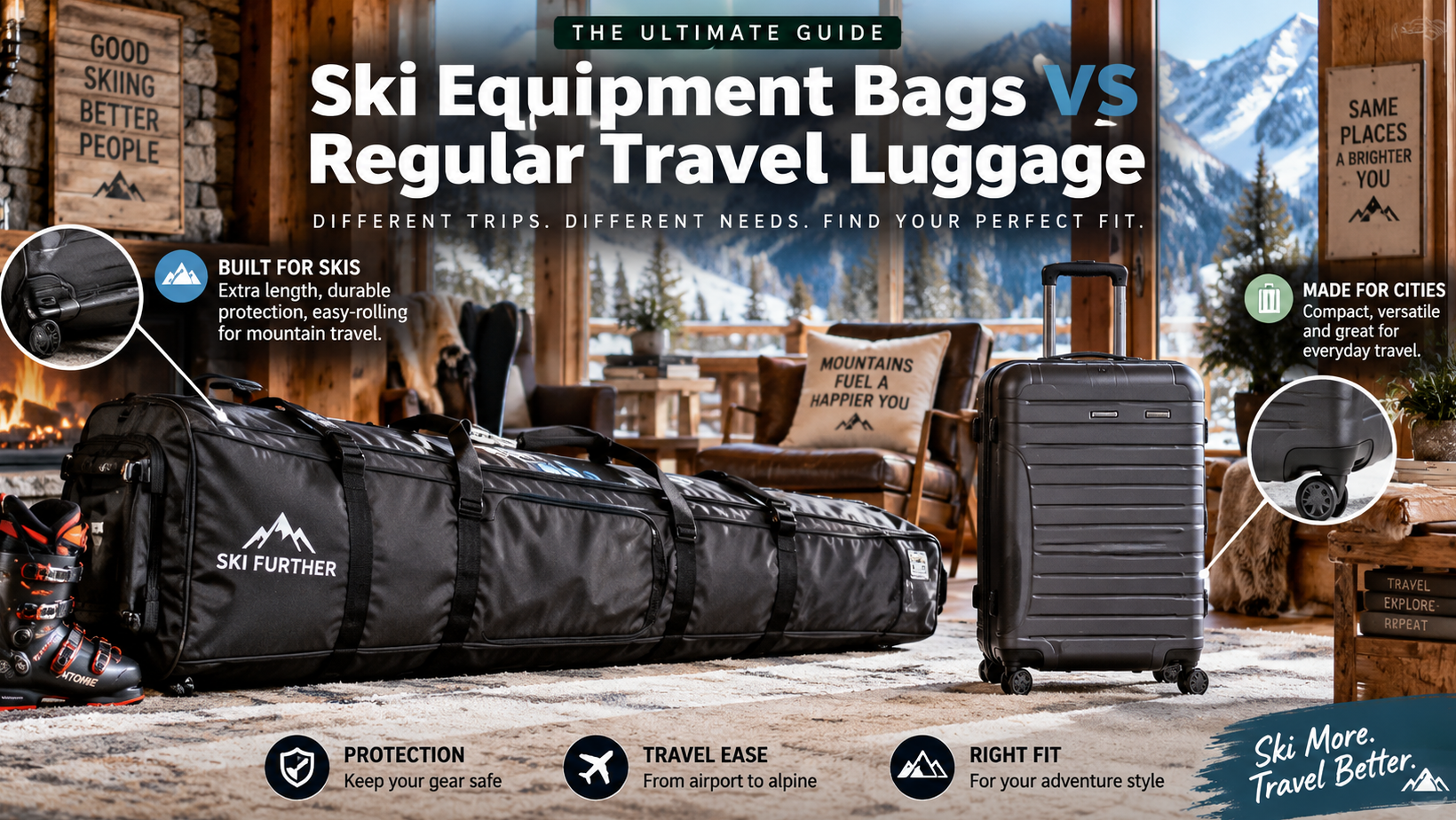
A ski equipment bag is shaped for long winter gear, while regular travel luggage is built around clothing and compact personal items. Both can use wheels, handles, zippers, and durable shells, but their proportions and protection priorities solve different problems.
The comparison becomes useful when you look at the complete trip. Skis or a snowboard need length and edge protection, boots need stable dense storage, and normal luggage needs easy access to everyday clothing. Trying to force every item into one suitcase usually creates compromises.
Ski Equipment Bag Vs Regular Luggage: What Actually Changes
Compare Ski Luggage By Long-Gear Fit
Regular suitcases are efficient for folded clothing but cannot match the long internal shape of dedicated ski luggage comparison options built around skis, poles, or a board.
Use Sports Travel Bags For Hardware Protection
Bindings, ski edges, poles, and snowboard hardware create pressure points that normal suitcase dividers were not designed to manage. Purpose-built sports travel bags can place cushioning and straps around those areas.
Split Winter Vacation Packing By Item Type
Clothing packs efficiently into cubes and suitcase compartments, while long equipment benefits from dedicated cases. Better winter vacation packing separates bulky sports gear from clean daily clothing instead of overloading one piece.
Use Travel Equipment Storage After The Trip
A suitcase can return to normal use immediately, but a sports bag may need drying and cleaning. Plan travel equipment storage so wet padding, straps, and long cases do not stay compressed between trips.
Choose Adventure Luggage By The Hardest Transfer
Airport floors favor wheels, while stairs, shuttle racks, and snowy walkways may require grab handles or shoulder carry. Compare adventure luggage with the route you actually expect instead of assuming a standard suitcase is easier everywhere.
Ski Equipment Bag Vs Regular Luggage Matrix
Use this table after the first complete packing test. The goal is to compare the bag with the exact equipment and route that will travel.
| Check | What to Review | Why It Matters |
|---|---|---|
| Long Skis and Boards | Purpose-built length | Usually unsuitable |
| Bindings and Edges | Padding and internal straps | Limited dedicated protection |
| Clothing Organization | Possible but secondary | Excellent for folded items |
| Airport Rolling | Available on many models | Common and efficient |
| Wet Gear | Designed for winter equipment | Can contaminate clothing space |
| Home Storage | Long case needs dedicated space | Compact standard footprint |
Pre-Flight Packing Checklist
- Measure long sports equipment
- Separate clean clothing from wet gear
- Check padding around hardware
- Compare total loaded weights
- Test wheels and handles
- Review airline sports-equipment rules
- Plan return-trip drying
- Store both bags without compression damage
Run the checklist with the bag completely loaded. An empty-bag inspection cannot reveal balance, zipper tension, internal movement, or the way hard gear presses into the shell.
Airline Rule Check
Sports-equipment policies can change by airline, route, aircraft, fare type, and baggage weight. Measure and weigh the finished bag at home, then compare the result with the operating carrier’s current rules before travel.
For a current airline example, review Delta Air Lines sporting-equipment guidance and compare sports-equipment rules with the normal checked-baggage allowance for your fare.
Final Buying Decision
A ski equipment bag and a regular suitcase are complementary rather than interchangeable. The sports case handles long protected gear; the suitcase handles clothing and compact travel items more efficiently.
Choose the minimum number of pieces that keeps each item type protected and manageable. If one bag becomes overloaded or difficult to handle, dividing the load usually improves both organization and travel comfort.
Frequently Asked Questions
Can skis fit in regular checked luggage?
Most standard suitcases are too short and are not designed for ski bindings, edges, or poles.
Is a ski equipment bag counted as normal luggage?
Airline policies vary. Many carriers treat skis or snowboards under sports-equipment rules, so check the operating carrier.
Should ski clothing go in the equipment bag?
Some soft clothing can fill safe spaces when rules allow, but keep it away from sharp edges, wet gear, and binding pressure.
Are hard suitcases more protective than ski bags?
They are rigid for normal luggage, but their shape is not designed for long skis or boards. A padded ski case protects different areas.
Do I need both a ski bag and a suitcase?
Often yes for longer trips, because separating sports equipment from clothing improves organization and keeps wet gear away from clean items.
