
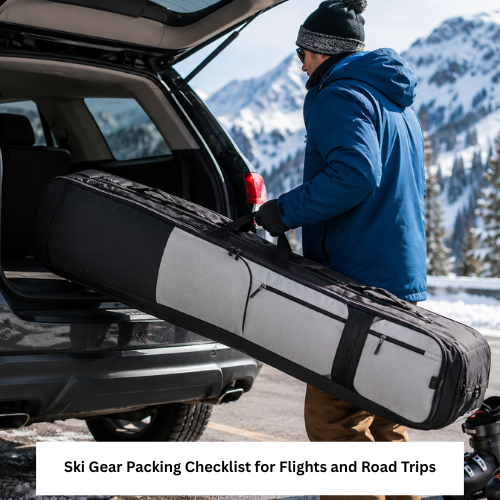
Careful ski gear packing protects skis, boots, goggles, helmets, clothing, and small accessories while keeping the load manageable. Flights require current airline checks, while road trips require secure vehicle placement and enough room for passengers and visibility.
Ski travel bag offers padded, wheeled, combo, and backpack options, but travelers should verify bag dimensions, padding, closures, package contents, and carrier rules before departure.
Ski Gear Packing Checklist by Travel Method
For flights, review the airline’s current definition of ski equipment, permitted pieces, size limits, weight limits, and fees. For road trips, check the cargo opening, seat layout, roof system instructions, and how equipment will be restrained.
A padded ski and gear travel bag can hold several equipment types when every item fits without forcing bindings, boots, or helmet edges against the zipper.
A padded ski and boot bag combo may simplify separate equipment storage when both pieces fit the traveler’s skis and boots and meet the selected transport rules.
| Bag Option | Best Use | Main Benefit | Possible Limitation | Verify Before Buying |
| Single padded ski bag | One pair of skis | Focused protection | Boots need another bag | Ski length and padding coverage |
| Ski and boot combo | Separate ski and boot storage | Easier organization | Two items to track | Airline equipment policy |
| Wheeled double ski bag | Larger loads and airports | Easier rolling | Heavier and harder to store | Empty weight and wheel protection |
| Boot backpack | Boots helmet and accessories | Hands free carrying | Can be bulky when full | Boot fit and loaded comfort |
| Adjustable ski bag | Different ski lengths | Reduces excess movement | Adjustment method varies | Exact length range and closure |
A wheeled double ski bag can reduce lifting through terminals when the wheels, handles, empty weight, and packed dimensions suit the trip.
A helmet and boot travel backpack can keep selected fragile and high priority items together when its compartments fit the actual boots, helmet, and goggles.
An adjustable padded ski carry bag can limit unused length when its adjustment system and padding match the skis being transport.
A padded ski bag combo example can help buyers compare listed ski length, boot storage, carrying methods, and package details before choosing.
Pack Skis Boots and Accessories Safely
Ski gear packing should begin with clean dry equipment. Secure brakes or bindings only by an approved method, protect sharp edges, and place poles so their tips cannot puncture the bag.
Use soft clothing as organized gap filling only when it does not place pressure on bindings, goggles, or helmet shells. Keep goggles in a case or protected pocket and pack small tools according to airline and transport rules.
Do not place damp socks, gloves, or liners in sealed sections for long periods. Use separate bags or compartments and dry everything after arrival.
Weight Labels and Compatibility
Weigh the complete packed bag rather than estimating from the listed bag weight. Attach identification inside and outside while avoiding personal details that are not need.
Photograph the packed equipment and bag condition before a flight. Confirm that handles and straps cannot catch on conveyors and remove detachable accessories when instructed.
For road travel, keep bags below window level when possible and secure them so sudden braking cannot move heavy equipment into passengers.
Troubleshooting Packing Problems
If ski gear packing creates a bulging bag, remove nonessential items or use a better matched size rather than forcing the zipper. If skis move inside, adjust approved straps or padding without placing hard pressure on bindings.
If the packed load is overweight, redistribute only after checking the carrier’s rules about separate boot bags and ski equipment. Do not assume a second piece is free.
After travel, inspect fabric, padding, wheels, handles, and zippers. Dry the bag fully before storing it loosely in a clean area.
Buying Checklist
- Measure skis poles boots helmet and bag storage areas
- Check airline size weight piece and fee rules
- Confirm vehicle cargo and passenger clearance
- Compare padding wheel handle and strap construction
- Separate goggles wet clothing and sharp accessories
- Check internal straps and ski length compatibility
- Weigh and label the packed bags
- Review cleaning drying warranty returns and support
- Verify every product specific detail before buying
Conclusion
Reliable ski gear packing starts with the correct bag sizes, dry equipment, protected goggles, controlled weight, and verified transport rules. Build a ski packing list for the exact trip and inspect every bag before leaving and after arrival.
FAQ
Should ski boots be packed with the skis for a flight?
Airline policies vary. Verify whether boots can share the ski bag or must travel in a separate approved piece.
How can skis be kept from moving inside a travel bag?
Use approved internal straps and suitable soft padding without placing damaging pressure on bindings or edges.
Can clothing be packed inside a ski bag?
Only when transport rules allow it and the clothing does not create excess weight or pressure on equipment.
What ski items should stay protected from hard gear?
Goggles, lenses, helmet surfaces, and delicate electronics separated from buckles, tools, and edges.
What should be checked after a road trip or flight?
Inspect skis, bindings, boots, padding, seams, zippers, handles, wheels, and any signs of moisture.
