
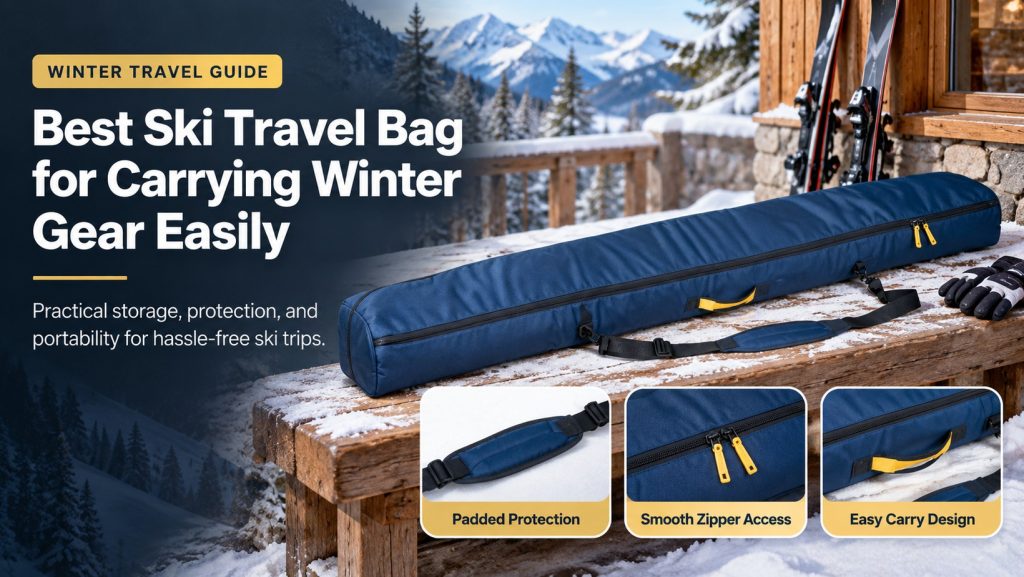
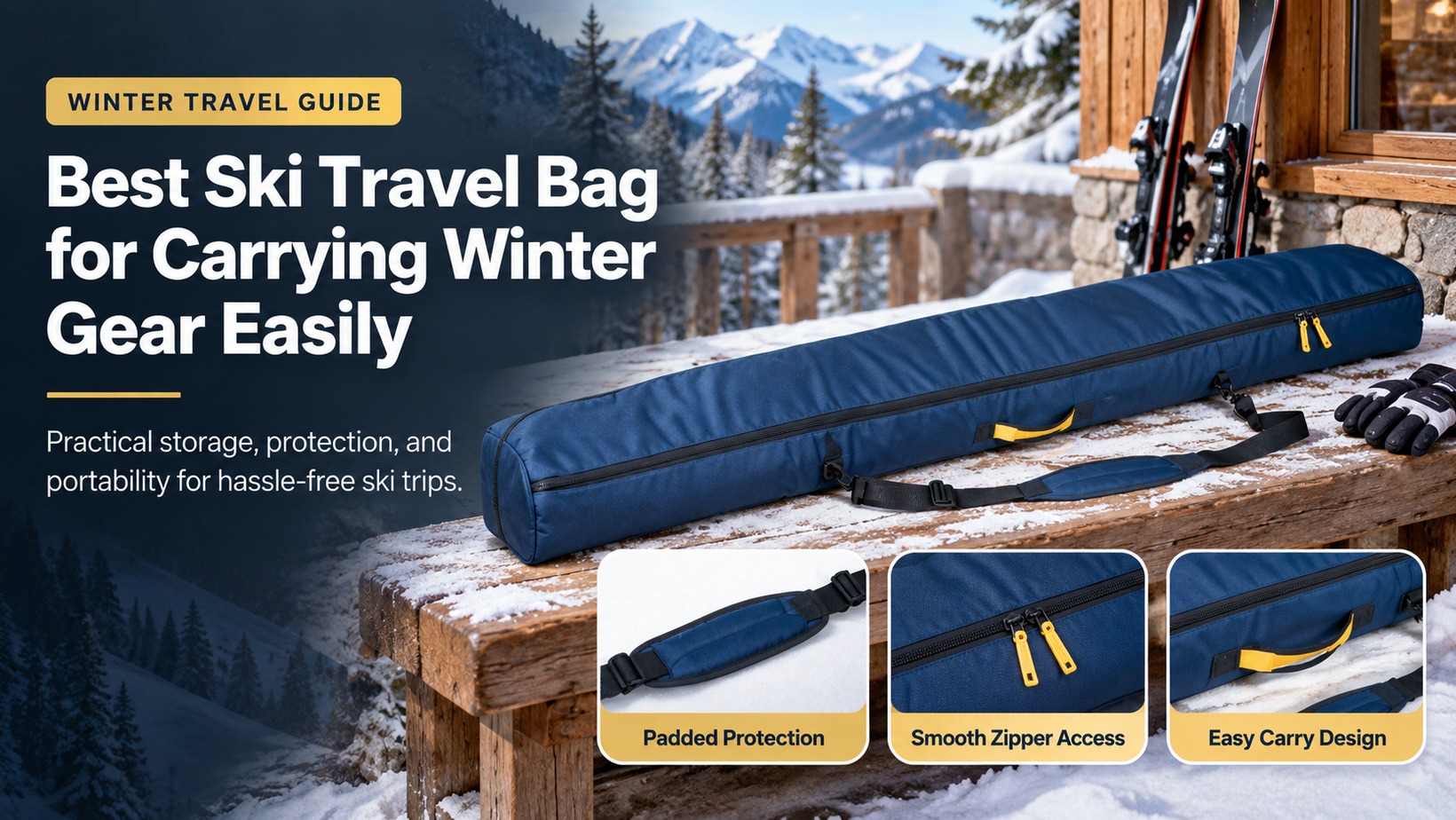
A ski travel bag should make winter equipment easier to move without turning every transfer into a wrestling match. The best choice is not simply the largest bag on the page. Ski length, poles, boots, helmet, layers, padding, handles, wheels, and the way the weight sits all determine whether a bag feels practical from the parking lot to the airport carousel.
Start with the gear you actually travel with. Lay out the skis or snowboard, poles, boots, helmet, gloves, goggles, outerwear, and small accessories, then decide what belongs in one long bag and what should travel separately. That simple inventory prevents buying oversized luggage that is difficult to carry or a narrow case that forces zippers around bindings and hard edges.
How to Choose a Ski Travel Bag for Real Winter Trips
Start with the full gear load, not the empty bag
Measure skis from tip to tail and decide whether poles, clothing, or a helmet will share the same case. Long empty space can allow gear to shift, while overfilling can press bindings into the sidewall and strain the zipper. Use the ski gear bag planning idea to separate hard, soft, wet, and fragile items before you choose a size.
Do a complete dry pack at home. Close every zipper, lift the bag from each handle, and walk through a doorway and up a flight of stairs. If the load twists or one end drops sharply, change the packing order before blaming the bag design.
Decide whether skis and boards should share one travel system
A ski-focused long bag and a board-focused case use different interior shapes. If your household travels with both sports, compare the snowboard travel bag fit process before assuming one case will handle every trip. Bindings change the effective width and can create pressure points even when the stated length is generous.
A multi-sport solution is useful only when the loaded gear stays protected. Do not let a snowboard edge sit directly against a ski base or allow poles to move freely beside bindings. Soft clothing can fill controlled gaps, but it should not be used to force a tight zipper closed.
Treat airline dimensions and weight as part of the design
A bag can be easy to pack at home and still be difficult at check-in. Long winter cases are handled as sports equipment by many airlines, so the winter sports luggage plan should include the operating carrier, total weight, allowed contents, and any combined boot-bag rules.
Weigh the finished bag, not the product alone. Boots, helmets, tools, wax accessories, and outerwear can add weight quickly. A lighter bag leaves more of the allowance for equipment and is often easier to reposition on a scale or luggage cart.
Plan for storage before and after the trip
Travel ends with wet gear, road salt, or snow residue. Your ski equipment storage routine should include opening the bag fully, drying the lining, wiping the exterior, and storing it without crushing the padding or wheel housing.
A bag that folds compactly can be convenient at home, but repeated hard creases may not suit thick structured padding. Follow the manufacturer care directions and store the bag where zippers and straps are not under tension.
Use compartments as an organizer rather than extra capacity
A travel gear organizer works best when each pocket has a repeatable purpose. Keep goggles in a protected space, gloves in a dry area, small straps or tools in a secure pocket, and identification where it can be reached without opening the main compartment.
Avoid filling every pocket just because it exists. A well-organized bag is easier to inspect and repack when a flight, shuttle, or hotel transfer forces a quick change.
Match the carry method to the route
A snow adventure bag may be carried by shoulder strap, grab handles, backpack straps, or wheels. Think about the longest walking segment on the trip. Wheels help on terminals but may add weight; shoulder carry is simple but can become tiring with a long dense load.
Load the bag and carry it for ten minutes before travel. Check handle comfort, strap length, balance, and whether the case swings into your legs. The easiest winter bag is the one that remains controllable when fully packed.
Ski Travel Bag Feature Comparison
Use this table after measuring your gear. It turns broad product claims into checks you can perform with the exact equipment that will travel.
| Feature | What to Check | Why It Matters |
|---|---|---|
| Length | Longest ski or board plus protective clearance | Prevents forced zippers and loose sliding |
| Padding | Ends, sidewalls and binding zones | Protects impact-prone areas |
| Carry system | Wheels, shoulder strap and grab handles | Controls loaded movement |
| Compartments | Wet, fragile and quick-access zones | Improves organization |
| Fabric and seams | Abrasion points and water-resistance claims | Affects durability in snow and transit |
| Weight | Bag plus complete gear load | Influences airline fees and handling |
Pre-Trip Ski Travel Bag Checklist
- Measure the longest hard item
- Pack the exact boots, helmet and poles you expect to take
- Protect ski tips, tails and bindings
- Keep goggles away from buckles and tools
- Close zippers without pulling around pressure points
- Lift the bag from every main handle
- Walk with the full load for ten minutes
- Measure and weigh the packed case
- Photograph the packed condition before check-in
Repeat the checklist whenever the equipment mix changes. A bag that fits one pair of skis and light clothing may behave very differently when a second set, heavier boots, or extra outerwear is added.
Airline and Airport Check
Sports-equipment rules vary by airline, route, fare, aircraft, and season. A ski bag that was accepted on a previous trip is not proof that the same weight or contents will be accepted on a new itinerary.
Check both the long equipment bag and any separate boot bag. Some carriers combine them for allowance purposes, while others may apply normal checked-bag rules when extra clothing or unrelated items are packed inside.
For a current official example, review Delta Air Lines sporting-equipment rules and then confirm the operating carrier for your own itinerary.
Final Buying Decision
The best ski travel bag is the one that matches your actual gear length, packing style, transfer route, and airline plan. A slightly lighter or simpler case can be easier to manage than a feature-heavy model that becomes awkward when full.
Measure first, dry-pack second, and only then compare wheels, padding, fabric, pockets, and price. That order keeps the decision focused on fit and protection instead of marketing language.
Frequently Asked Questions
How much extra length should a ski travel bag have?
Enough to close without forcing the tips or tails while avoiding excessive empty space. The exact clearance depends on padding, ski shape, and how the adjustment system works.
Should boots go inside the same ski travel bag?
Only when the bag is designed for the combined load and the boots do not create hard pressure against skis or exceed airline rules.
Are wheels necessary on a ski travel bag?
No. Wheels help on long terminal walks, but they add weight and hardware. A balanced non-wheeled bag can be easier for short transfers.
Can clothing be used as extra padding?
Soft clothing can fill controlled gaps, but it should not replace proper protection at ski tips, tails, bindings, and other hard contact points.
Should the bag be weighed before every flight?
Yes. Equipment and clothing combinations change, and airline weight limits can make a few extra pounds important.
