
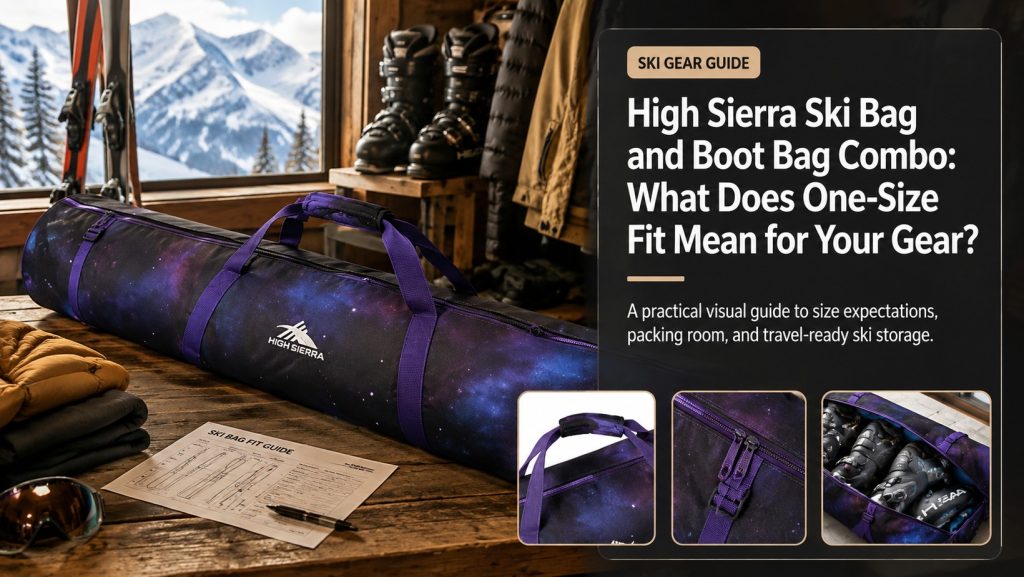
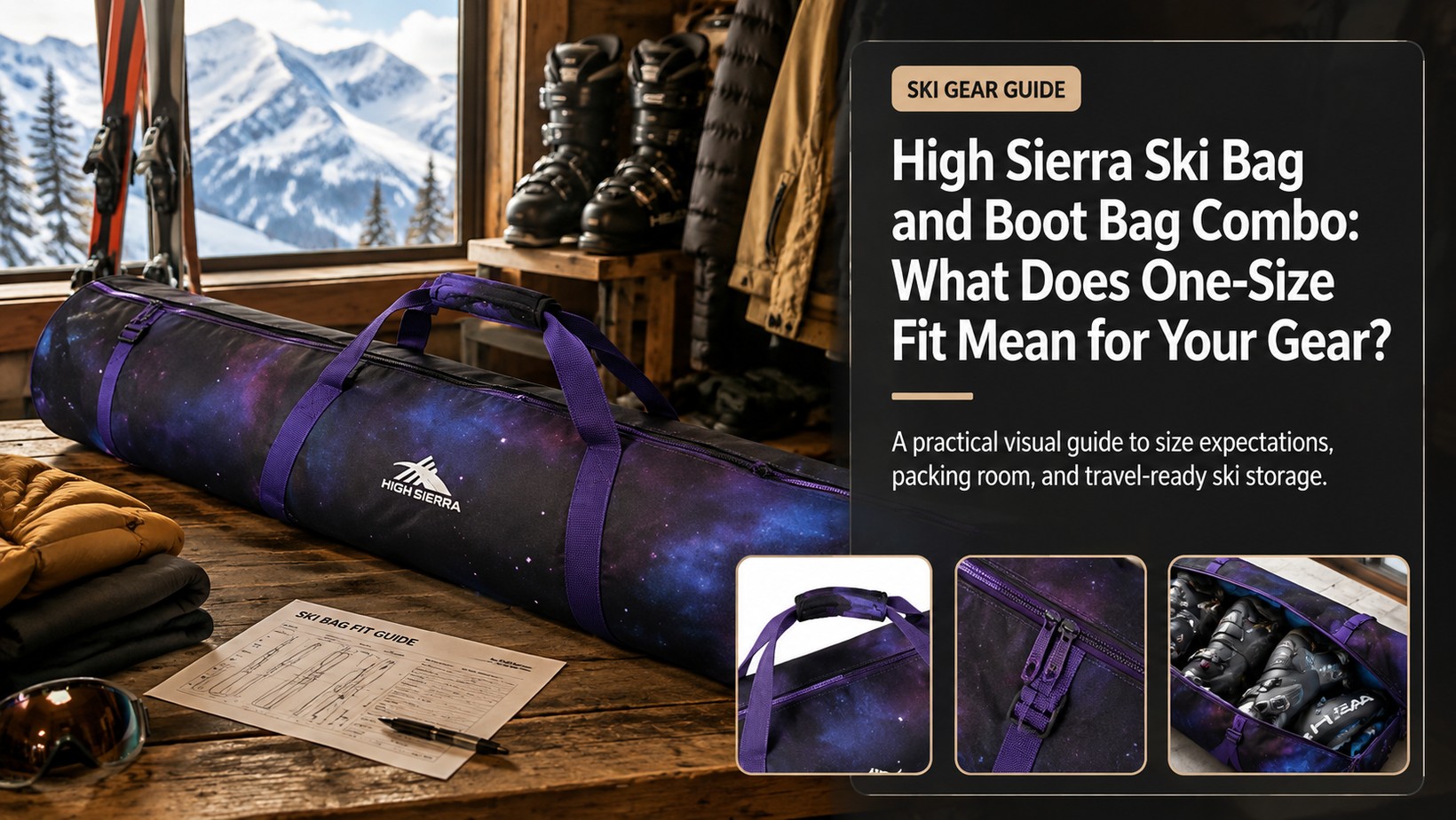
The High Sierra Ski Bag and Boot Bag Combo uses a one-size approach, but “one size” should never be interpreted as “every ski and every boot.” Fit depends on the ski length and profile, the shape of the bindings, the boot shells, and how much room the bag leaves at the closure.
A recreational skier can make the decision much more objective by measuring equipment before ordering. Record the longest ski, the tallest binding point, and the boot dimensions that actually determine zipper clearance. Then compare those measurements with the current product listing and return policy.
High Sierra Ski Bag And Boot Bag Combo One-Size Fit Method
Start With The Current Product Dimensions
One-size can simplify shopping only when the current bag dimensions align with your equipment. Check the product listing, then measure the usable length instead of assuming model-year ski labels are exact. Use the High Sierra ski combo sizing check as the related reference for this specific decision.
Understand The Limits Of A Fixed-Length Bag
A fixed bag can be too short for long skis or unnecessarily loose around short skis. End padding, internal straps, and the location of the zipper affect how much of the stated length is truly usable. Use the one-size ski bag limitations check as the related reference for this specific decision.
Pack The Boots Before Accessories
Boot shells determine the base shape of the boot bag. Place them first and add gloves or goggles only where soft items do not force the zipper or press lenses against hard plastic. Use the High Sierra boot bag packing check as the related reference for this specific decision.
Use A Repeatable Ski Measurement
Measure from the furthest point of the tip to the tail on the ski itself. Do not rely on memory or a product-name length when a few centimeters can decide whether the end panel is under tension. Use the ski length measurement checklist check as the related reference for this specific decision.
Check Boot Fit With The Actual Pair
Boot size numbers do not fully describe shell volume. A larger cuff or aggressive overlap can change the way two boots nest inside a bag, so perform the check with the exact pair you will travel with. Use the boot fit in High Sierra bag check as the related reference for this specific decision.
Use Separate Pieces To Control Pressure
A combo gives two bags for a reason: skis remain long and relatively flat while boots are dense and bulky. Keeping those loads separate can make each piece easier to inspect, weigh, and handle. Use the separate ski and boot luggage check as the related reference for this specific decision.
One-Size Fit Worksheet
Use this table after the first dry-pack. The goal is to turn a product claim into a repeatable check you can perform with the exact equipment that will travel.
| Check | What to Do | Why It Matters |
|---|---|---|
| Longest ski | Measure actual tip-to-tail length | Checks fixed bag length |
| Binding profile | Measure the highest packed point | Checks closure room |
| Boot pair | Nest the actual shells | Checks boot-bag volume |
| Soft accessories | Add after hard gear | Avoids hidden compression |
| Travel weight | Weigh both pieces | Prevents airport surprises |
Pre-Flight Packing Checklist
- Write down the exact ski length
- Measure rather than estimate binding height
- Confirm boot shells fit before adding clothing
- Keep goggles in a protected pocket or case
- Check the zipper with no hand pressure on the bag
- Lift each piece from every intended handle
- Verify name tags and contact information
- Recheck airline rules before the return flight
Run the checklist with the bag completely loaded. An empty-bag inspection cannot reveal balance, zipper tension, internal movement, or the way hard gear presses into the shell.
Airline Rule Check
Sports-equipment policies can change by airline, route, aircraft, fare type, and baggage weight. Measure and weigh the finished bag at home, then compare the result with the operating carrier’s current rules before travel.
For a current official reference, review Delta’s ski and snowboard equipment policy. Use the airline page for the final decision rather than relying on an old forum post or a previous trip.
Final Buying Decision
One-size works when the fixed geometry matches the gear you already own. The High Sierra combo should close naturally around the skis and boots, with enough protective space to avoid pressure but not so much that equipment slides inside.
Measure first, pack the hard items before the soft ones, and weigh both pieces. That simple process turns “one size” from a vague claim into a testable travel decision.
Frequently Asked Questions
Does one-size mean it fits every ski length?
No. One-size describes the bag, not every possible ski. Compare the usable interior with your actual ski measurements.
Should I buy extra length for future skis?
A little useful clearance can help, but excessive empty length can allow movement. Buy around your current and realistically planned equipment.
Can a boot bag hold a helmet too?
Some can, depending on boot-shell size and bag capacity. Pack boots first and add the helmet only if it fits without compression.
Why measure bindings if the ski length fits?
Bindings create height and hard pressure points that can affect zipper clearance and how the bag sits when closed.
Can the boot bag and ski bag count as one airline item?
Some airlines have special sports-equipment rules, but policies vary. Check the operating carrier before every trip.
